
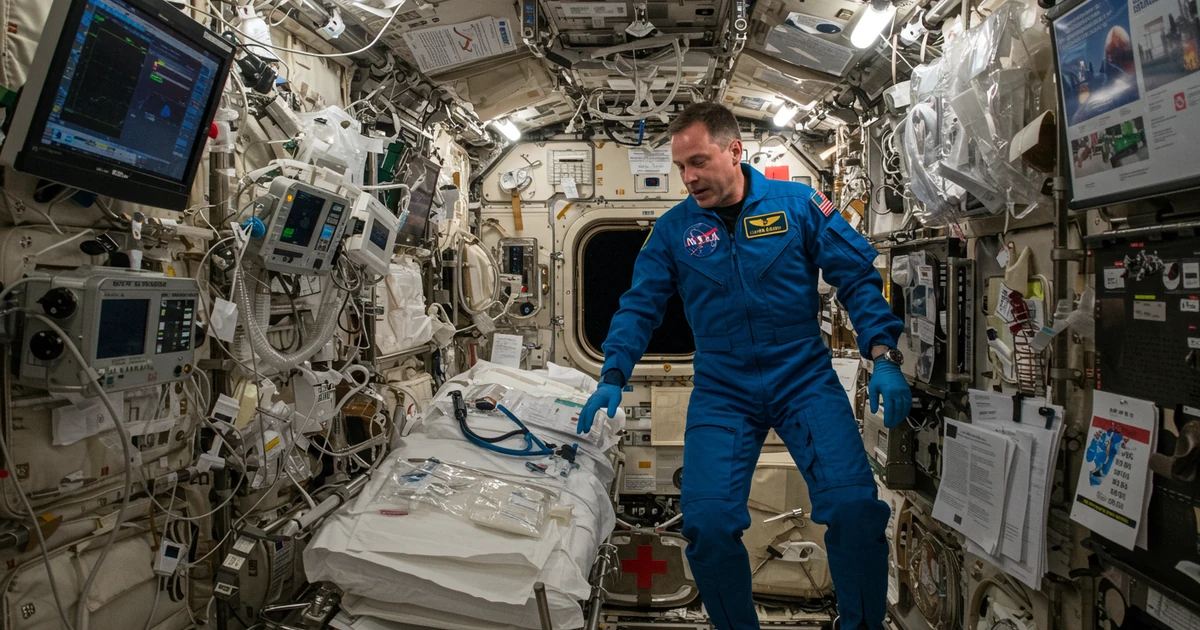

An astronaut’s sudden, unexplained medical emergency aboard the international space station that prompted a historic evacuation remains a mystery, the crew member revealed Friday. The incident adds a serious human drama to what is already a period of unprecedented activity and transition for the orbiting laboratory. Our team is analyzing what this means for the future of human spaceflight.
→ McDonald’s New K-Pop Meal Redefines Fan Culture
- NASA astronaut Mike Fincke spoke publicly on March 27, 2026, for the first time about his medical emergency, stating doctors are still unable to explain why he suddenly lost the ability to speak in orbit.
- The episode in January 2026 led to the first-ever medical evacuation from the ISS, forcing Fincke and his three crewmates to return to Earth more than a month ahead of schedule.
- This event occurs as the station experiences a surge in diverse activities, from new commercial missions and scientific discoveries to major European flight plans.
Veteran NASA astronaut Mike Fincke described the harrowing in-flight incident as happening “completely out of the blue.” He was eating dinner on January 7, preparing for a spacewalk, when he suddenly found himself unable to talk. His crewmates saw he was in distress and immediately sought help from flight surgeons on the ground, initiating a sequence of events that highlights the inherent risks of space travel.
Fincke, a retired Air Force colonel with four spaceflights to his name, confirmed the episode lasted about 20 minutes and that he felt fine afterward. He has since undergone extensive testing, but the root cause has not been identified. Doctors have ruled out a heart attack or choking, but Fincke noted that factors related to his cumulative 549 days in weightlessness are being considered.
The decision was made to bring the SpaceX crew home on January 15, over a month early, a move NASA deemed necessary for the astronaut’s well-being. Fincke, who only recently identified himself as the patient to end public speculation, expressed regret over the canceled spacewalk and the early end to his crewmates’ mission but was told by colleagues, “This wasn’t you. This was space, right?”.
What Does this Mean for Future Astronaut Health?
Our analysis suggests this high-profile incident will intensify the focus on astronaut health during long-duration missions, especially as NASA and its partners plan for expeditions to the Moon and Mars. The mystery surrounding Fincke’s condition underscores how much is still unknown about the human body’s reaction to the extreme environment of space. Industry insiders are noting that this event could lead to new medical protocols and contingency plans for the international space station.
The event also puts a spotlight on the robust emergency capabilities developed by NASA and its commercial partner, SpaceX. The ability to evacuate a crew on short notice demonstrates a critical function of the commercial crew program. This capability is vital as the international space station becomes a busier and more complex hub for both government astronauts and private citizens.
Why is the International Space Station so Busy Now?
While the medical emergency has captured headlines, it is just one thread in a larger story of intense activity surrounding the orbiting outpost. The station is a hive of commercial, scientific, and international endeavors. This very week, a Roscosmos cargo craft docked to resupply the crew, who are busy with science preparations and maintenance.
Just last week, the European Space Agency (ESA) made a significant announcement, confirming plans to purchase a dedicated SpaceX Crew Dragon flight to send its own astronauts to the international space station. Dubbed the EPIC mission, this move is designed to secure European access to space before the iconic station is decommissioned around 2030. This underscores the urgency and value nations are placing on gaining experience in orbit.
This builds on the growing commercialization of low-Earth orbit, a strategy heavily championed by NASA. The agency recently greenlit the fifth private astronaut mission with Axiom Space (Ax-5), scheduled for 2027, which will see more private citizens live and work on the international space station. These missions are fundamental to building a sustainable economy in space, according to a statement from Axiom Space.
| Mission/Event | Date | Organization(s) | Significance |
|---|---|---|---|
| Crew-11 Early Return | Jan. 2026 | NASA / SpaceX | First medical evacuation from the ISS. |
| Atmospheric Wave Discovery | Mar. 2026 | NASA | ISS instrument links a hurricane to upper atmosphere disturbances. |
| ESA EPIC Mission | Announced Mar. 2026 | ESA / SpaceX | Ensures European astronauts fly before the ISS retires. |
| Axiom Mission 5 (Ax-5) | Planned for 2027 | NASA / Axiom Space | Continues the expansion of commercial human spaceflight. |
A Platform for Science and Culture
Beyond major missions, the international space station continues to be a unique platform for discovery and even viral moments. On March 26, it was revealed that an instrument on the station had detected previously unknown “atmospheric waves” connecting a hurricane on Earth to the mesosphere, 55 miles up. This gives a new perspective on how weather events impact our planet’s atmospheric layers.
On a lighter note, life aboard the station captured social media’s attention this week. NASA astronaut Don Pettit caused a stir by posting a photo on X (formerly Twitter) of a strange-looking purple, egg-shaped object that turned out to be a potato he grew in orbit. The post, which you can see on his X channel, is a fun reminder of the ongoing experiments into space agriculture, a critical technology for future settlements on the Moon and Mars.
From urgent medical situations and major international deals to groundbreaking science and viral potatoes, the international space station is trending for a reason. It represents a dynamic and critical juncture in humanity’s push into the cosmos, where every event, planned or unplanned, shapes the future of exploration. Our team will continue to follow these developments as they unfold.
Relevant posts
- Sofoximmo: What It Is & Why It Matters in 2026
- cdiPhone | Best Deals & Reviews at FrugalKite
- Banflix: Revolutionizing the Streaming Experience for Movie Lovers
Visit frugalkite.com for more stories.


 By
By