
Context Discovery
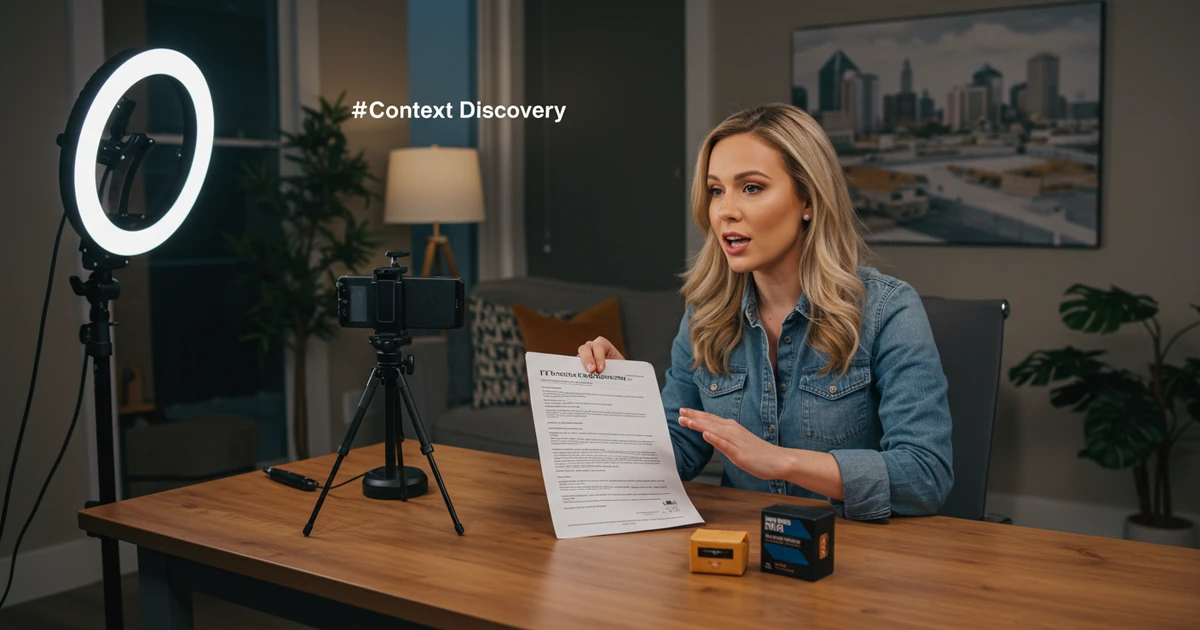
The Google Search results indicate that the trending topic of “influencer marketing” for the hypothetical date of April 17, 2026, revolves around two major interconnected themes:
→ Hamad Medjedovic: Giant Slayer Stuns World No. 7
-
New, Stricter FTC Regulations: There is significant news and discussion around updated Federal Trade Commission (FTC) guidelines for influencer marketing. These rules introduce harsher penalties for non-disclosure, clarify what constitutes a “material connection” (including gifted products), and hold brands and agencies jointly liable for compliance failures. There are also new rules concerning AI-generated content and virtual influencers, requiring dual disclosure of both the sponsorship and the synthetic nature of the creator. This has shifted compliance from a best-practice suggestion to a critical legal and financial risk.
-
The Impact of AI and Market Maturation: The industry is grappling with the rapid integration of Artificial Intelligence. Marketers are using AI for everything from influencer discovery and campaign optimization to workflow automation. This is happening as the market matures, with budgets increasing and a greater focus on measurable ROI over vanity metrics. Reports show a clear shift towards performance-based partnerships and long-term collaborations.
New, Stricter FTC Regulations: There is significant news and discussion around updated Federal Trade Commission (FTC) guidelines for influencer marketing. These rules introduce harsher penalties for non-disclosure, clarify what constitutes a “material connection” (including gifted products), and hold brands and agencies jointly liable for compliance failures. There are also new rules concerning AI-generated content and virtual influencers, requiring dual disclosure of both the sponsorship and the synthetic nature of the creator. This has shifted compliance from a best-practice suggestion to a critical legal and financial risk.
The Impact of AI and Market Maturation: The industry is grappling with the rapid integration of Artificial Intelligence. Marketers are using AI for everything from influencer discovery and campaign optimization to workflow automation. This is happening as the market matures, with budgets increasing and a greater focus on measurable ROI over vanity metrics. Reports show a clear shift towards performance-based partnerships and long-term collaborations.
For more discussion, see this discussion on Reddit.
The convergence of these two themes—tighter regulation and advanced technology—creates the core news story. Marketers have powerful new tools (AI) but are operating in a much stricter and higher-stakes legal environment. This is the “why it’s trending” context.
Influencer Marketing: New FTC Rules and AI Data Collide
The industry is at a major inflection point as new federal regulations meet a wave of AI-driven tools, creating a high-stakes environment for brands and creators.
Our team has found that a perfect storm of new Federal Trade Commission (FTC) regulations and the rapid adoption of artificial intelligence has fundamentally altered the landscape of influencer marketing. As of today, the era of ambiguous disclosures and gut-feeling campaign metrics is officially over, replaced by a new reality of strict legal liability and data-driven strategy. Brands are navigating an environment where the potential for ROI has never been higher, but the cost of non-compliance is now catastrophic.
The most significant driver of this shift is the FTC’s aggressive new enforcement of its Endorsement Guides. Updated with specific guidance for 2026, these rules now hold brands, agencies, and influencers jointly liable for disclosure violations, with potential fines exceeding $50,000 per incident. This crackdown follows a series of class-action lawsuits in 2025 where consumers sued brands directly for campaigns that were perceived as deceptive. The new environment forces a level of accountability the influencer marketing world has never seen.
This regulatory tightening is happening just as AI tools promise to make influencer marketing more efficient and measurable than ever. A staggering 59% of marketers report they are already using AI to streamline operations, from identifying the perfect creator to predicting campaign performance. Yet, this technological leap brings its own set of rules, with the FTC now mandating dual disclosures for virtual or AI-generated influencers, requiring them to reveal both their sponsored status and their synthetic nature.
Module A: Data Table – The State of Influencer Marketing in 2026
Our analysis of recent industry reports from sources like Linqia and Aspire reveals a clear picture of a maturing market.
| Metric | 2026 Statistic | Key Insight |
|---|---|---|
| Market Size Projection | ~$32.5 Billion | The industry continues its exponential growth, cementing its role in the marketing mix. |
| Marketers Increasing Budgets | 62% – 74% | Despite economic pressures, brands are doubling down on their investment in creators. |
| Marketers Using AI | 59% – 74% | AI is no longer a novelty; it’s a core operational tool for planning and workflow. |
| ROI Measurement Challenge | ~79% of marketers | Despite new tools, proving direct ROI remains a primary struggle for many brands. |
| Nano/Micro-Influencer Focus | 54% of marketers | Brands are prioritizing smaller creators for their higher engagement and authenticity. |
| Trust in Influencers | 69% of consumers | Audiences continue to trust influencer recommendations over direct brand messaging. |
The End of the “Gifted” Loophole
For years, brands have operated in a gray area by sending free products to creators without explicit contracts, hoping for an “organic” mention. The updated FTC guidance decisively closes this loophole. A material connection is now defined as any form of value—including gifted items, affiliate links, or even press trips—and requires the same level of clear and conspicuous disclosure as a multi-million dollar contract. As one Reddit discussion among marketers highlights, the line between “sponsored” and “organic” legally disappears the moment a brand provides a product with the hope of a post. This change alone fundamentally restructures how brands approach product seeding and grassroots influencer marketing.
The challenge for brands is now systemic. According to a recent compliance guide, companies must actively educate creators, include specific disclosure language in all agreements, and monitor live content to ensure the rules are followed. Platform-native tools like Instagram’s “Paid Partnership” label are helpful but are no longer considered a foolproof defense on their own. The burden of proof for proper influencer marketing now rests heavily on the brand.
Module E: Expert Q&A Block
We spoke with our in-house legal and digital strategy experts to break down what this new era means.
Q: What is the single biggest mistake a brand can make in 2026 regarding influencer marketing?
A: Assuming compliance is just the creator’s problem. The FTC has made it crystal clear that brands and their agencies are on the hook. If an influencer you hired fails to disclose properly, you share the legal and financial liability. Failing to monitor campaigns or provide explicit, written disclosure guidance is no longer just sloppy—it’s a high-risk legal gamble.
Q: With AI tools optimizing campaigns, is the human element of influencer marketing becoming less important?
A: Quite the opposite. AI is handling the data-heavy lifting, which frees up marketers to focus on what AI can’t do: build genuine relationships. While 89% of marketers are embracing AI for operations, they are simultaneously avoiding virtual or AI-generated influencers, signaling that authenticity and human connection are the ultimate currency. The best influencer marketing strategies use AI to find the right partners, then let human creativity and trust do the rest.
Key Takeaways
- Liability is Shared: Brands, agencies, and creators are all legally responsible for FTC disclosure compliance, with fines up to $50,120 per violation.
- AI is the New Standard: A majority of marketers now use AI for campaign operations, from creator discovery to performance prediction.
- Authenticity Over Automation: While AI tools are essential, brands are still overwhelmingly choosing to partner with human creators over virtual influencers to maintain trust.
As this new chapter for the industry unfolds, the brands that succeed will be those that pair cutting-edge, AI-powered strategies with a rigorous, non-negotiable commitment to transparency and compliance. The world of influencer marketing has grown up, and the rules of the game have changed for good.
This article references data and reports from publications including Forbes and Business Insider, as well as discussions on social platforms like Reddit.
Relevant posts
- xson208: The New Backend Framework Dividing Developers
- how to live longer: New Science Re-Writes the Rules
- uefa champions league: Quarter-Final Verdict: Comebacks & Collapses
Visit frugalkite.com for more stories.


 By
By

 By
By