

Gasoline:
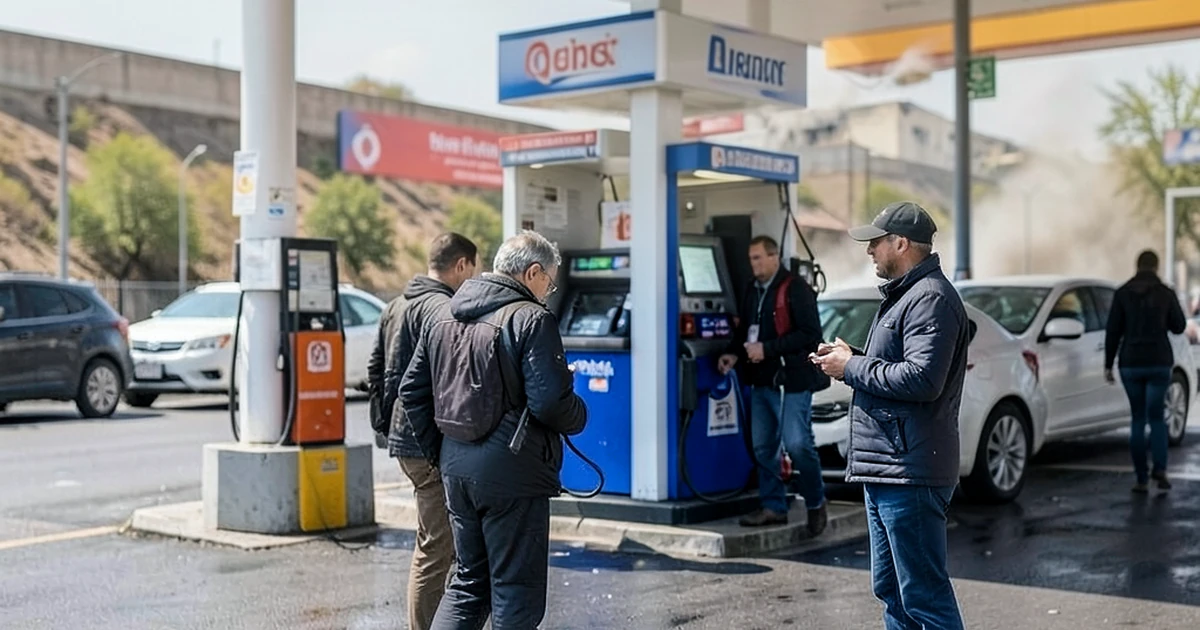
If you felt a shock at the gas station this morning, you weren’t imagining it.
→ SGA Shatters Wilt’s Record, Cements MVP Case
That sudden jump in price overnight is directly tied to a rapidly escalating crisis halfway across the world.
It’s a stark reminder of how connected your daily drive is to global geopolitics.
The reason?
Crude oil prices have exploded past the $100 per barrel mark for the first time since 2022.
- The Core Event: International oil prices have surged after Iran’s new leadership declared the Strait of Hormuz, a critical global oil artery, closed, effectively choking off nearly 20% of the world’s oil supply.
- The Impact on You: U.S. national average gasoline prices have jumped dramatically.
→ West Bloomfield Synagogue Attack Shakes Community
AAA reports the average is now around $3.59 a gallon and climbing, with some areas seeing much steeper, faster increases.
- The Global Response: The International Energy Agency (IEA) has labeled this the most significant oil supply disruption in history and has authorized a record-breaking release of 400 million barrels from strategic reserves to stabilize the market.
What Just Happened in the World’s Most Critical Waterway?
The entire global energy market is reacting to one thing: the shutdown of the Strait of Hormuz.
For more discussion, see this discussion on Reddit.
Iran’s new Supreme Leader, Mojtaba Khamenei, ordered the vital shipping lane closed, with reports indicating the passage is being mined.
Think of this strait as the planet’s oil superhighway.
About a fifth of all global oil consumption passes through this narrow channel.
Shutting it down is like closing every major interstate highway into a city at once.
The market‘s reaction was immediate and severe.
Brent crude, the international benchmark, skyrocketed by over 9%, smashing the $100 per barrel barrier.
West Texas Intermediate (WTI), the U.S. benchmark, followed suit, surging to over $95 per barrel.
This isn’t just a number on a trader’s screen.
It’s the foundational cost of the gasoline that powers our economy.
The Immediate Impact: Your Wallet at the Pump
This global panic translates directly to the price you pay.
Our team observed reports from across the country showing prices jumping dozens of cents in mere hours.
This isn’t a slow creep; it’s a price shock.
According to data from AAA, the national average has climbed to roughly $3.59, a price not seen in years, with some states like California seeing averages well over $5.00.
The frustration is palpable.
One user on Reddit noted, “On the way to work this morning, the QuickChek I pass had gas listed at 2.82 per gallon.
Fast forward to the way home from work and it was already up to 3.15.” This real-time reaction, captured in a discussion on Reddit, highlights the speed at which this crisis is hitting Main Street.
Here’s a snapshot of the sudden change:
| Timeframe | Average Price (Regular Unleaded) | Net Change |
|---|---|---|
| Last Week | ~$3.25/gallon | – |
| Today (March 13, 2026) | ~$3.59/gallon | +$0.34 |
A Global Scramble for a Solution
In response to the supply seizure, the International Energy Agency (IEA) has pulled its emergency lever.
The agency, which helps coordinate energy policy for major consuming nations, announced the largest-ever coordinated release of oil from strategic petroleum reserves.
The plan is to inject 400 million barrels into the market to offset the Iranian blockade.
But here’s the kicker.
That historic release might just be a temporary patch.
All eyes are on the Organization of the Petroleum Exporting Countries and its allies (OPEC+).
According to a statement on the OPEC website, the group met on March 1st and agreed to a very modest production increase, but it’s a drop in the ocean compared to the volume lost from the strait’s closure.
Their previous meetings had already established a cautious approach for March, pausing any significant production hikes.
While conventional wisdom says this crisis means prices will only go up, our data points to a different reality long-term.
Just a few months ago, the consensus forecast was for cheaper gasoline in 2026.
Projections from the U.S.
Energy Information Administration (EIA) and major financial institutions pointed to an average price of around $2.90 to $3.10 per gallon for the year.
Those forecasts were based on strong U.S. production and growing global inventories.
This crisis doesn’t erase those fundamentals; it just throws a massive, violent wrench into the machine.
The translation for your day-to-day is that while we are in for a period of painful prices, the underlying supply capacity exists for a significant price drop if and when the geopolitical situation de-escalates.
The Pain Point Only an Insider Knows
This crisis couldn’t have come at a worse time for seasonal gas prices.
Refineries are in the middle of their annual switch from winter-blend to summer-blend gasoline.
This summer-blend fuel is inherently more expensive to produce because of additives required to prevent evaporation in warmer weather.
In practical terms, this means drivers are getting hit with a double-whammy: a massive geopolitical price spike on top of the usual seasonal price increase.
It’s a frustrating reality that compounds the pain at the pump.
This event underscores a fragile truth: despite advancements in domestic production and the long-term shift toward electric vehicles, the price of gasoline remains powerfully linked to conflicts in decades-old geopolitical hotspots.
As federal fuel economy standards from agencies like the National Highway Traffic Safety Administration push for a fleet average of nearly 49 mpg by this model year, the volatility of fuel costs makes the argument for efficiency and alternative energy sources more compelling than ever.
Relevant posts
- Bunker Boom Reveals Deepening Global Anxieties
- Is Toonily Safe to Use? Everything You Need to Know
- UGFreak Review: Does This Male Enhancement Supplement Really Work?
Visit frugalkite.com for more stories.


 By
By



 By
By